Series 05
Kopo Kopo
Series 05
Kopo Kopo
Comparison
Kopo Kopo vs. the Direct Safaricom Daraja API: Which Should Your POS Use?
Daraja gives you the raw Safaricom API. Kopo Kopo wraps it with support, webhooks, and multiple payment channels. What each means for your shop's till.
25 August 2026 · Kiosk
Your POS needs to take M-Pesa. Behind the scenes there are two ways that happens: a direct connection to Safaricom's developer API — Daraja — or a payment company like Kopo Kopo that sits on the same rails and does the hard work for you. For a shop owner, the right answer is short. It's worth understanding why.
1. What Daraja Actually Is
Daraja is Safaricom's developer API for M-Pesa — the interface that lets software trigger STK Push, receive payment notifications, and move money. It's a pipe, and it's a powerful one. It is also raw: you register with Safaricom, manage authentication, handle callbacks, retry failures, and build the reconciliation yourself. Daraja doesn't run a till; it gives you the pieces a till needs and leaves the assembly to you.
2. What Kopo Kopo Adds
Kopo Kopo builds on Safaricom's infrastructure and wraps the pipe in what a business actually needs: signed webhooks so confirmations can't be faked, Buy Goods till matching by amount and paying number, Send Money for payouts, a dashboard to watch it all, and support with someone to call. One integration, several payment channels — money in and money out.
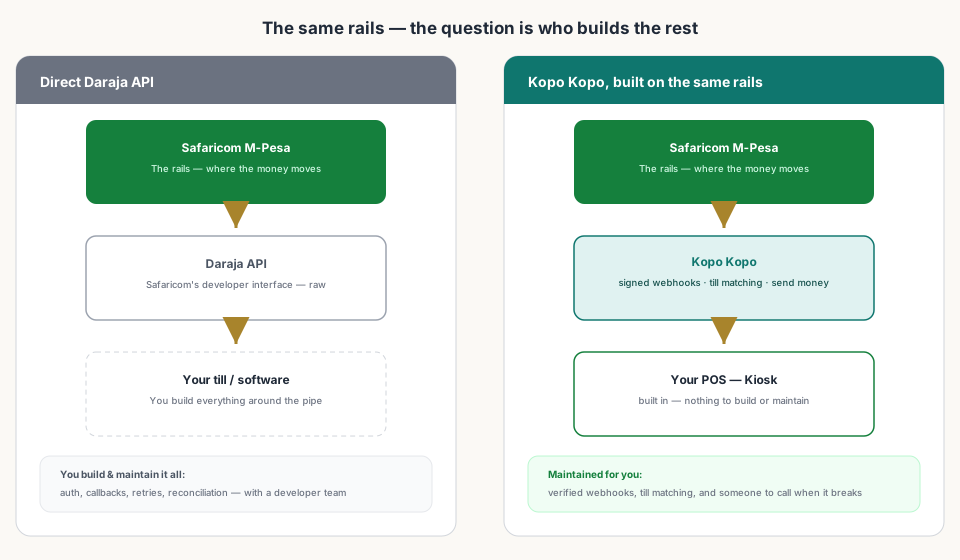
3. The Comparison That Matters for a Shop
| Direct Daraja | Kopo Kopo | |
|---|---|---|
| Who builds the integration | Your developer team | The payment company, maintained |
| Payment confirmations | You wire up callbacks | Signed webhooks, verified |
| Till payment matching | You build it | Built in, by amount + number |
| Send Money payouts | You build it | Built in |
| What breaks | Your code — you fix it | Their rails — they fix it |
| Who you call | Nobody; you're the support | Kopo Kopo support |
4. When Daraja Makes Sense
The direct route is for builders: a business with its own developers, building custom software at scale, for whom the API is the product. A fintech, a big retailer with a software team, an enterprise doing volume and wanting full control. If that's not you — and for a shop it usually isn't — the direct route buys you maintenance work you don't need.
5. What Your POS Should Do
Your POS should have made this decision for you: a named payment gateway with verified webhooks, till matching, and reports — so M-Pesa just works at the counter and the shift balances itself. On Kiosk, that's the KopoKopo gateway under Payments: connect it once, and STK Push, Buy Goods till matching, and supplier Send Money all run through it.
Read next:
- Kopo Kopo Integration for POS Systems: The Complete GuideThe pillar guide — how Kopo Kopo connects to a till, plain English.
- Why M-Pesa Integration MattersNative M-Pesa versus bolted-on payments, from the counter up.
- Best POS Systems in Kenya with Kopo Kopo IntegrationHow systems compare on how deep their Kopo Kopo support goes.
- Kopo Kopo API Webhooks Explained for Non-DevelopersThe signed confirmation — the piece a direct build gets wrong.
- Kiosk.ke's Kopo Kopo IntegrationWhat the built-in KopoKopo gateway looks like in practice.
Frequently asked questions
What is the difference between Daraja and Kopo Kopo?
Daraja is Safaricom's raw developer API for M-Pesa. Kopo Kopo is a payment company built on Safaricom's rails that adds what a shop actually needs: signed webhooks, Buy Goods till matching, Send Money, a dashboard, and support — behind one integration.
Does my shop need the Daraja API?
No. A shop needs a till that takes M-Pesa reliably — the POS and its payment provider handle the API. Kiosk connects to Kopo Kopo, which builds on the same rails Daraja exposes.
Is Daraja free?
Getting API access involves Safaricom's developer registration and approval, and M-Pesa transactions carry their own costs. The real cost of the direct route is the engineering: building and maintaining auth, callbacks, retries, and reconciliation.
Which is more reliable for a till?
The one with maintained integration, verified webhooks, and someone to call when it breaks. That's the aggregator's job — the direct API leaves the maintenance to you.
Is Kopo Kopo built on Daraja?
Kopo Kopo builds on Safaricom's M-Pesa infrastructure — the same rails the Daraja API exposes — and adds the payment layer on top: webhooks, till matching, Send Money, and a dashboard.
How do I know which my POS uses?
Look at the payment settings. A named gateway like KopoKopo or Paystack means an aggregator; raw API keys and endpoint configuration usually mean a direct integration. Kiosk lists its gateways by name under Payments.
Related articles
- PaymentsKopo Kopo Integration for POS Systems: The Complete GuideHow Kopo Kopo connects to a POS — Buy Goods tills, STK Push, and signed webhooks that match every M-Pesa payment to a sale automatically. The complete guide for Kenyan retailers.
- PaymentsWhy M-Pesa Integration Matters (and What 'Native' Really Means)In Kenya, mobile money is how customers pay. What native M-Pesa at the till means — STK Push in one tap, auto-credited sales, and a shift that balances itself.
- RankingsBest POS Systems in Kenya with Kopo Kopo IntegrationPOS systems in Kenya that work with Kopo Kopo — ranked on how deep the integration goes: native STK, till matching, webhooks, and settlement reports.
- PaymentsKiosk.ke's Kopo Kopo Integration: Why It's the Best for Kenyan ShopsHow Kiosk.ke connects Kopo Kopo to your till — native STK Push, Buy Goods till matching, signed webhooks, and supplier Send Money — and why that makes it the best Kopo Kopo integration in Kenya.
- PaymentsKopo Kopo API Webhooks Explained for Non-DevelopersWebhooks are how your till finds out a payment happened — in plain English. What a signed payment notification is, why it beats checking messages, and what it means for your shop.
Ready for a POS built for Kenya?
Start free on Kiosk.ke — barcode POS, native M-Pesa STK, offline sales, and an online storefront from one stock count.