
Series 03
Kiosk vs Odoo
Series 03
Kiosk vs Odoo
Inventory
Online + Physical: One Inventory (Stop Selling What You Don't Have)
How a single stock count across your web shop and counter stops overselling, ghost stock, and late-night spreadsheet reconciliations.
Updated 24 August 2026 · Kiosk
The moment a shop starts selling in two places — at the counter and on a web storefront — a question appears that no shopkeeper asked for: which list is the truth? The one on the till? The one on the website? The one in the notebook? For shops that started digital with two separate systems, that question gets answered the expensive way — at midnight, with a calculator and a headache.
1. The Two-Number Trap
Here's how it usually starts: the shop adds an online storefront, but the web shop keeps its own little stock list while the till keeps its own too. Nothing is wrong at first — until a Saturday sale and a web order meet in the middle of the same last unit. The website says 1 left. The shelf says sold. Somebody has to apologise to a customer.
That's the two-number trap: separate counts that drift apart, then demand reconciliation — usually late at night, from memory, with a pile of receipts. The more channels you add, the more lists you juggle, and the more certain the mismatch becomes.
2. One Count, Everywhere
Kiosk treats inventory as a single number. The till, the storefront, supplier deliveries, and stock takes all read and write the same count:
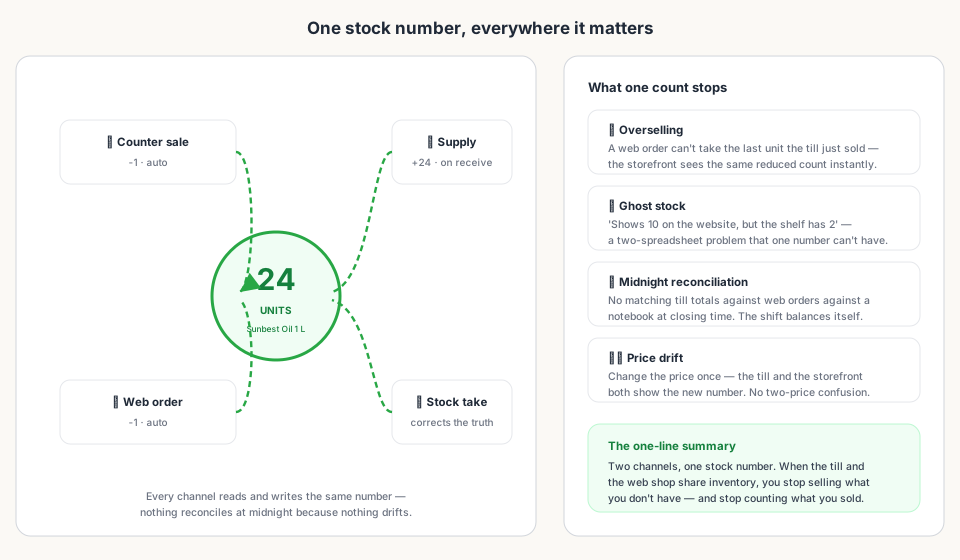
- A sale at the counter decrements the count — and the storefront sees it instantly.
- A web order decrements the same count — the shelf next to the till already knows.
- A received supply increments it — once, and every channel benefits.
- A stock take corrects it — and both channels inherit the correction.
3. What One Count Stops
- Overselling — the last unit can only be sold once; the second channel sees the truth immediately.
- Ghost stock — 'shows 10, shelf has 2' is a two-list problem; one number can't have it.
- Midnight reconciliation — the shift balances itself because the sale is the record.
- Price drift — change a price once and both the till and the storefront show the new number.
4. Same Product, Same Number — Counter and Web
Watch one product move through both channels: a customer buys the last cooking oil at the counter at 09:12; at 09:13, the storefront shows 23 — not 24, not 'probably fine' — because the storefront pulls its stock from the same count the till just wrote to.
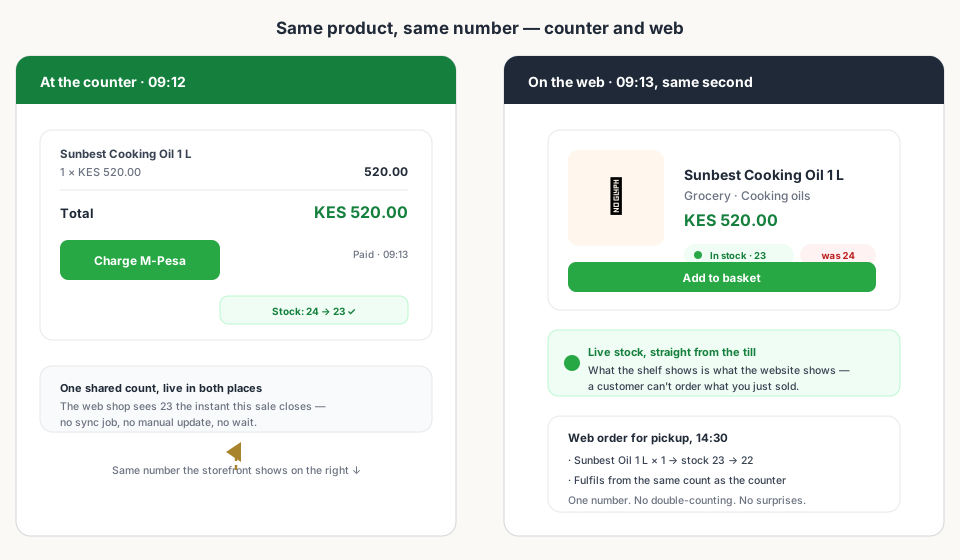
And when a web order for pickup lands at 14:30, it fulfils from the same number. No double-counting, no 'did I sell this twice?' — just one count moving honestly between two channels.
5. What This Looks Like When You Run the Shop
For the shopkeeper, one inventory changes the daily rhythm:
- Closing time is faster — cash, M-Pesa, and web orders all land in the same till record.
- Restocking is clearer — the low-stock list comes from the same count customers see online.
- Expansion is easier — a second branch is one more reader of the same system, not one more spreadsheet to reconcile.
Bottom Line
Read next:
- Set Up a POS in Kenya in 30 MinutesGet the till and storefront live the same afternoon — one stock count included.
- How to Grow a Mini-Mart in KenyaFrom surviving to scaling, with honest stock control at the centre.
- What Hardware Do You Actually Need?Phone, scanner, printer — the only kit a Kenyan counter needs.
- Why M-Pesa Integration MattersNative mobile money that lands in the same till record as cash.
- From Stall to Store: A Retailer's JourneyOne shop, one till, one storefront — the growth story in practice.
Frequently asked questions
What does 'one inventory' mean?
Your till and your online storefront share the same stock count. A sale at the counter decrements it, a web order decrements the same number, and a received supply increments it — there is only one number to be right about.
How do online and counter sales stay in sync?
They don't need syncing — they read and write the same count. Because the storefront pulls stock from the same catalog as the till, a counter sale is reflected online the instant it closes.
Can I sell the same item in both channels?
Yes, and that's the point. One count means the last unit can only be sold once — if the till sells it first, the storefront immediately shows the reduced stock instead of taking an order you can't fulfil.
Do I still need to reconcile stock at night?
No. Nightly spreadsheet matching exists to fix the gap between two separate lists. With one count, the till, the web shop, and your reports all agree by construction.
Can customers see live stock on my storefront?
Yes — the stock status a customer sees online comes from the same count the till uses, so 'in stock' means the same thing in both places.
What happens if I keep two separate systems?
That's exactly how overselling and ghost stock happen: the website shows 10 while the shelf has 2, and someone has to reconcile the difference by hand. Two lists always drift; one number can't.
Related articles
- ComparisonChoosing the Right POS for Your Business: Kiosk.ke vs. OdooA clear guide to deciding between Kiosk.ke — a turnkey local retail POS — and Odoo, a full enterprise ERP suite. Compare setup time, payments, and who each platform fits.
- Getting startedSet Up a POS in Kenya in 30 MinutesHow to set up a POS in Kenya in 30 minutes — create your account, add products, take M-Pesa payments, and stay eTIMS-ready with KRA. No IT project required.
- StoriesFrom Stall to Store: A Retailer's JourneyHow a small retailer moves from cash-only stall sales to a synced till and online shop without losing the plot.
- HardwareWhat Hardware Do You Actually Need for a POS in Kenya?Phone, scanner, printer — a no-nonsense hardware checklist for a Kenyan retail counter. Start with the phone you own, upgrade when the queue demands it.
- PaymentsWhy M-Pesa Integration Matters (and What 'Native' Really Means)In Kenya, mobile money is how customers pay. What native M-Pesa at the till means — STK Push in one tap, auto-credited sales, and a shift that balances itself.
- GrowthHow to Grow a Mini-Mart in Kenya: From One Shop to a Real BusinessPractical steps to move a Kenyan mini-mart from surviving to scaling — compliance, stock control, M-Pesa, digital presence, reinvestment, and knowing when to open a second branch.
Ready for a POS built for Kenya?
Start free on Kiosk.ke — barcode POS, native M-Pesa STK, offline sales, and an online storefront from one stock count.