
Series 06
eTIMS & Taxes
Series 06
eTIMS & Taxes
Tax & compliance
Excise Duty and Retailers in Kenya: What Mini-Marts Actually Deal With
Excise duty for Kenyan mini-marts, explained: what's excisable, why the duty is already in your wholesale price, who has to register as a licensee, and the duty-unpaid trap to avoid.
25 August 2026 · Kiosk
Excise duty is the tax on the fun stuff — sodas, juices, beer, cigarettes. For a mini-mart owner it sounds like another registration, another return, another deadline. The truth is the opposite: for a retailer, excise is mostly invisible, and the only real danger is a bargain that was never taxed in the first place.
Who actually pays excise duty
Excise duty is levied on manufacturers and importers of excisable goods — not on retailers. The duty is paid once, at the point of production or import, and it travels with the goods through the supply chain, embedded in every price you pay. By the time a bottle of soda reaches your shelf, the duty is already in the wholesale price. You never see it as a separate line, you never charge it to the customer, and you never file a return for it.
What's excisable (and what that means for your shelf)
| Category | Examples | Your role as retailer |
|---|---|---|
| Sweetened beverages | Sodas, sweetened juices | None — duty in the wholesale price |
| Alcohol | Beer, spirits (if you stock them) | None — plus hold a liquor license where required |
| Tobacco | Cigarettes | None — but be alert to duty-unpaid stock |
| Telecom | Airtime, data resale | None — reflected in reseller prices |
The excise schedule changes with every Finance Act, so the exact list and rates move. What doesn't change is the structure: duty attaches to specific goods at source, and a retailer's job is simply to sell goods that were properly taxed on their way in.
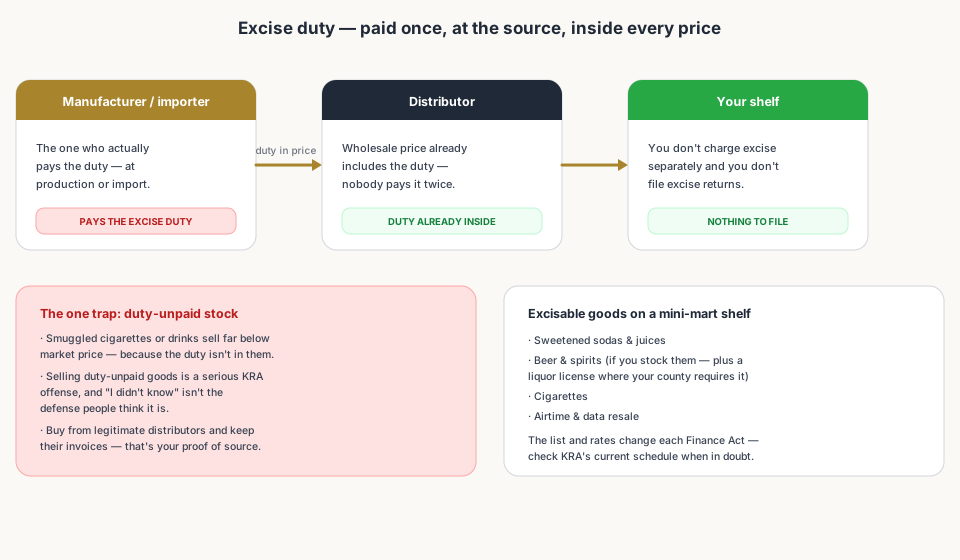
The one trap: duty-unpaid stock
This is also where records protect you. If you buy from legitimate distributors and keep their invoices, you can demonstrate where every excisable product on your shelf came from. A till that logs your purchases and stock movements makes that demonstration instant instead of frantic.
The one registration you might actually need
If you start manufacturing — say, blending juices or roasting and packaging snacks — or importing excisable goods directly, then you step into the licensee role and the returns that come with it. For a shop that buys finished goods from distributors, none of that applies.
- Record-Keeping and KRA Penalties: What Kenyan Shop Owners Must Keep (and Avoid)The records that prove your stock was properly taxed.
- What Is eTIMS in Kenya? The System ExplainedThe invoice system that shows KRA what you sell.
- Taxes for Mini-Marts in Kenya: The Complete eTIMS & KRA GuideThe pillar guide — every tax mapped in one place.
Frequently asked questions
Do mini-marts need an excise license in Kenya?
No — not for selling excisable goods like sodas, juices, beer, or cigarettes. An excise license is for manufacturers and importers of excisable goods. As a retailer, the duty is already embedded in the wholesale price you pay your supplier; you don't charge or remit excise yourself.
Is excise duty included in the price I pay my supplier?
Yes. For excisable goods, the manufacturer or importer pays the duty, and it's built into the wholesale price that reaches your shelf. That's why a bottle of soda's price barely moves between shops — the duty component is fixed at source.
Which goods sold in a mini-mart carry excise duty?
Typically sweetened beverages and sodas, fruit juices, beer and spirits, and cigarettes. The list changes with each Finance Act, so check the current schedule on KRA's portal. Airtime and data are also excisable, which is why your airtime reseller prices already reflect it.
What is the duty-unpaid trap for retailers?
Goods that entered the country or the market without excise duty paid — smuggled cigarettes and drinks, usually — sell far below normal prices. The cheap price is the red flag: if a product costs suspiciously little, the duty probably isn't in it, and stocking it can land you in serious trouble with KRA regardless of whether you knew.
Related articles
- Tax & complianceTaxes for Mini-Marts in Kenya: The Complete eTIMS & KRA GuideEverything a mini-mart owner in Kenya needs to know about tax — eTIMS, VAT, turnover tax, income tax, PAYE, excise, records, and penalties — and how the right till keeps it manageable.
- Tax & complianceWhat Is eTIMS in Kenya? The System ExplainedeTIMS — KRA's Electronic Tax Invoice Management System — explained for shop owners: how invoices get authorized, who must use it, and the four ways to run it.
- Tax & complianceRecord-Keeping and KRA Penalties: What Kenyan Shop Owners Must Keep (and Avoid)What records a Kenyan shop must keep and for how long, the KRA penalty schedule for late returns and eTIMS violations, and why automatic records beat reconstruction.
- Tax & complianceTurnover Tax (TOT) in Kenya: Who Pays, the Rate, and How to FileTurnover tax explained for Kenyan shop owners — the KSh 1–25 million range, the 3% rate, the monthly filing routine, and how TOT relates to income tax and VAT.
Ready for a POS built for Kenya?
Start free on Kiosk.ke — barcode POS, native M-Pesa STK, offline sales, and an online storefront from one stock count.