
Series 01
Grow a Mini-Mart
Series 01
Grow a Mini-Mart
Getting started
How to Start a Mini-Mart in Kenya: From Idea to Opening Day
How to start a mini-mart in Kenya — capital, location, licenses, first stock, and the till that keeps it honest. A step-by-step plan from idea to opening day.
Updated 24 August 2026 · Kiosk
Every mini-mart in Kenya starts with the same picture in someone's head: a bright little shop in the estate, shelves full, the smell of fresh bread, regulars calling your name from the door. The gap between that picture and an actual opening day is mostly decisions — where, how much, what to stock, and which tools to trust. This guide walks the whole journey, step by step, with the numbers and screenshots to make it real.
1. Before You Sign Anything: Is This the Right Business?
Mini-marts sit in a sweet spot in Kenyan retail — bigger than a duka, smaller than a supermarket — serving estates, small towns, and peri-urban centers that want convenience close to home. Margins in the space typically run 15–30%, and most owners consider the business genuinely profitable once daily sales cross roughly KSh 50,000. But the business runs on foot traffic, and foot traffic is local.
- Location — is there a real crowd? Count people past the shop at 7am and 6pm before you sign.
- Capital — can you cover the setup budget and still breathe for two months?
- Competition — three dukas on the same street is a war; one supermarket down the road is a signal to specialise.
- Your time — you'll be the owner, cashier, stock-taker, and cleaner for the first months. That's the tuition.
2. The Money: Startup Budget
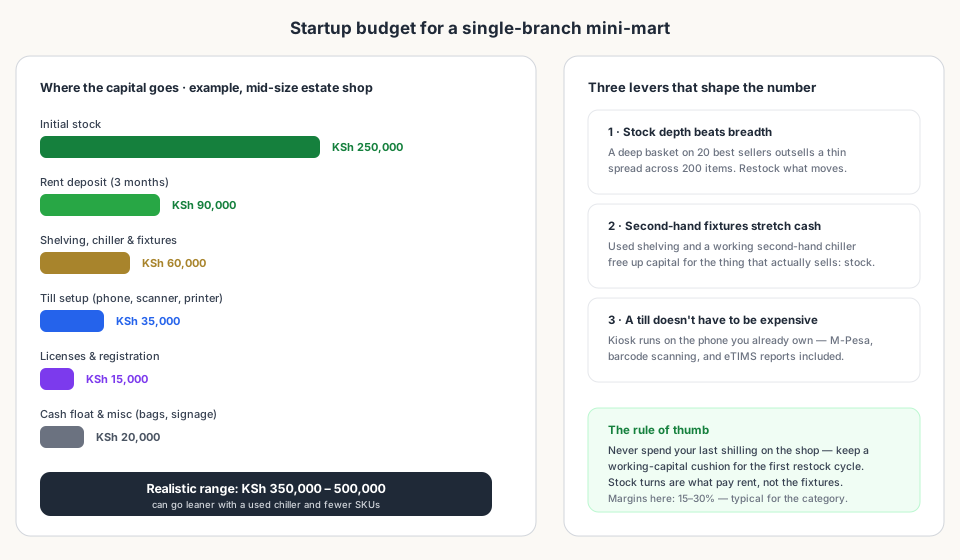
Here's where the money actually goes — and the honest range for a single-branch estate shop in 2026:
| Item | Typical cost | Why it matters |
|---|---|---|
| Initial stock | KSh 200,000–300,000 | The only line that makes money; everything else just holds it. |
| Rent deposit (3 months) | KSh 60,000–120,000 | Landlords want a deposit; negotiate the terms in writing. |
| Shelving, chiller & fixtures | KSh 40,000–90,000 | Second-hand is fine — a working chiller beats a shiny empty one. |
| Till setup | KSh 20,000–50,000 | A phone you own plus a scanner and printer is enough to start. |
| Licenses & registration | KSh 10,000–20,000 | Business name, county permit, KRA and eTIMS, M-Pesa number. |
| Cash float & misc | KSh 15,000–30,000 | Change, carrier bags, signage, and the surprises of week one. |
3. Location & the Floor Plan That Sells
A mini-mart earns per square metre, so layout is strategy. The classic layout that works in Kenyan estates: impulse items at the front, staples along the walls, the chiller at the back, and the counter by the door with a clear view of everything.
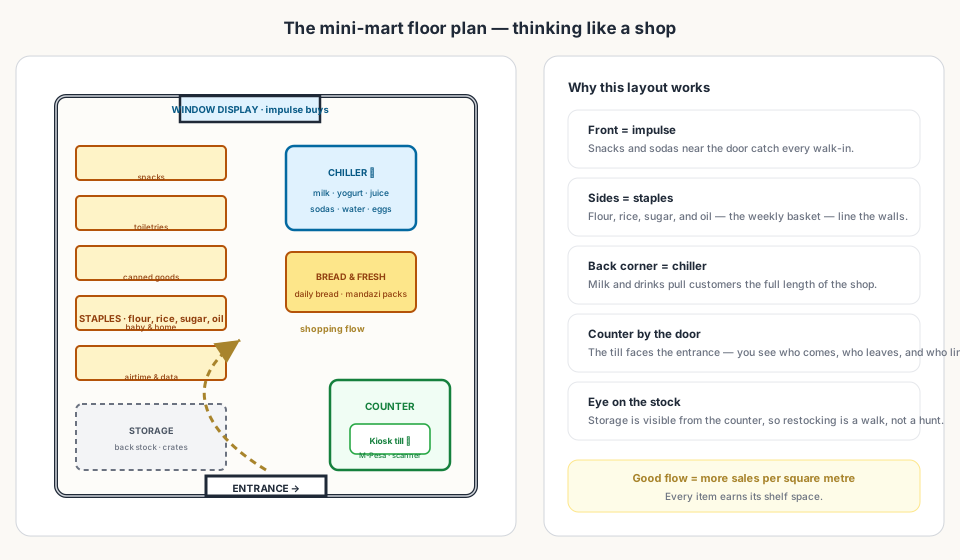
- Front = impulse — snacks, sodas, and chewing gum catch every walk-in.
- Walls = staples — flour, rice, sugar, and oil carry the weekly basket.
- Back corner = the chiller — milk and drinks pull customers the full length of the shop.
- Counter by the door — the till faces the entrance, so you see who comes, who leaves, and who lingers.
- Storage visible from the counter — restocking becomes a walk, not a hunt.
4. Licenses & Compliance, Done Once
Paperwork is the least glamorous part of opening — which is exactly why it should be done first. Start the day you sign the lease, in parallel with fitting the shop, so nothing waits on anything else.
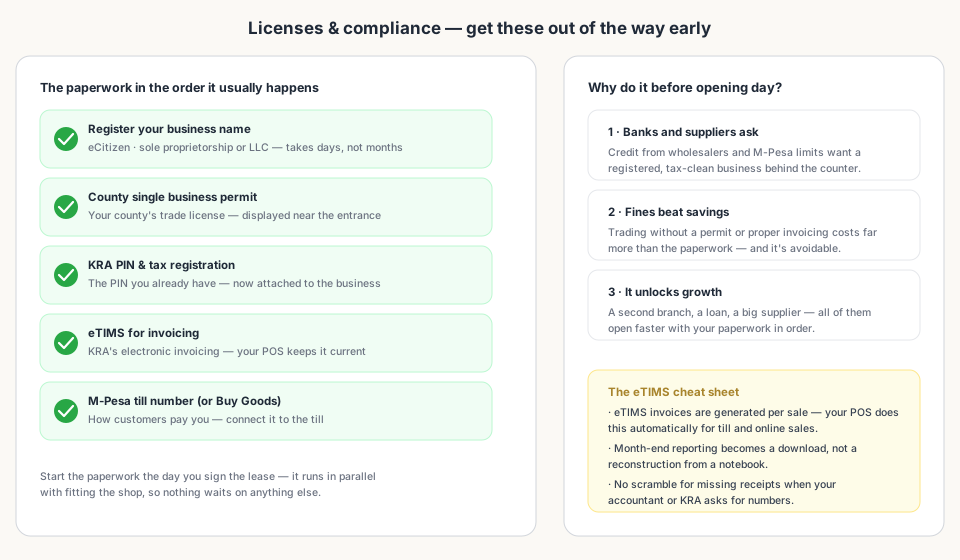
- Business name — registered on eCitizen; sole proprietorship or LLC.
- County single business permit — your trade license, displayed near the entrance.
- KRA PIN — attached to the business, not just to you.
- eTIMS — KRA's electronic invoicing; a modern POS keeps it current automatically.
- M-Pesa till or Buy Goods number — how your customers will actually pay you.
5. Stock: The Art of the First Order
The first order is where most new shopkeepers either shine or bleed. The rule: deep on best sellers, not wide on everything. Here's a starter shelf split that has walked through a thousand Kenyan doors:
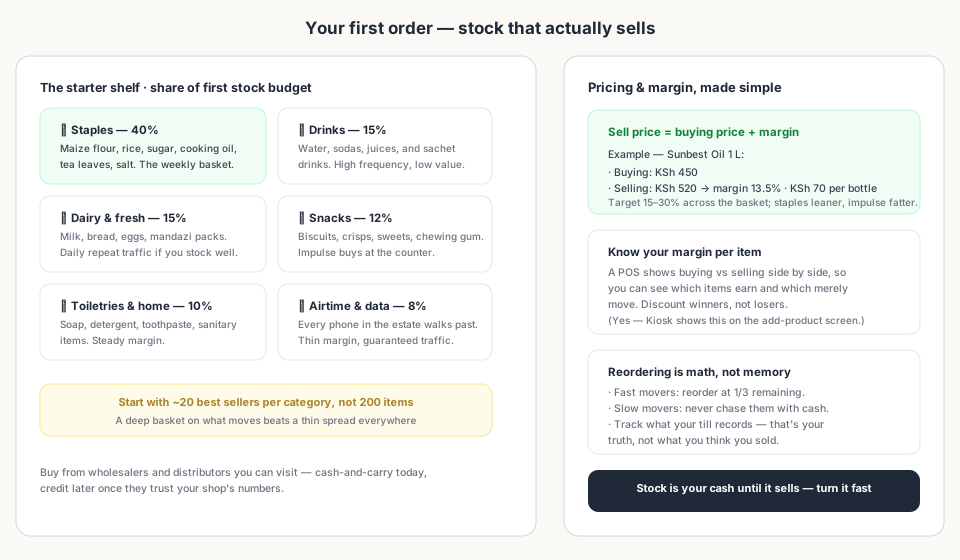
Pricing is simple once the till shows you the truth: sell price = buying price + margin, targeting 15–30% across the basket — leaner on staples, fatter on impulse. When the till records every purchase, reordering becomes math: restock fast movers at a third remaining, and never chase slow movers with fresh cash.
6. The Till: Get Kiosk
Now the tool that holds it all together. When we say get Kiosk, we mean it — it's the POS built for exactly this business: a Kenyan mini-mart with a phone at the counter, M-Pesa in front, and a shelf that needs to stay honest.
- Runs on your phone — no terminal wall, no IT project, no card required to start.
- Barcode scanning builds your catalog fast — scan a product once and it's in with prices and stock.
- Native M-Pesa STK at the till — one tap sends the push, the sale auto-completes on confirmation.
- eTIMS-ready — invoices generated per sale, ready for KRA reporting without month-end archaeology.
- Free to start — 300 products and one cashier, with your storefront included.
7. Opening Day
If the prep is done, opening day is almost boring — and that's the goal. Here's a timeline that has worked, from till setup to close:
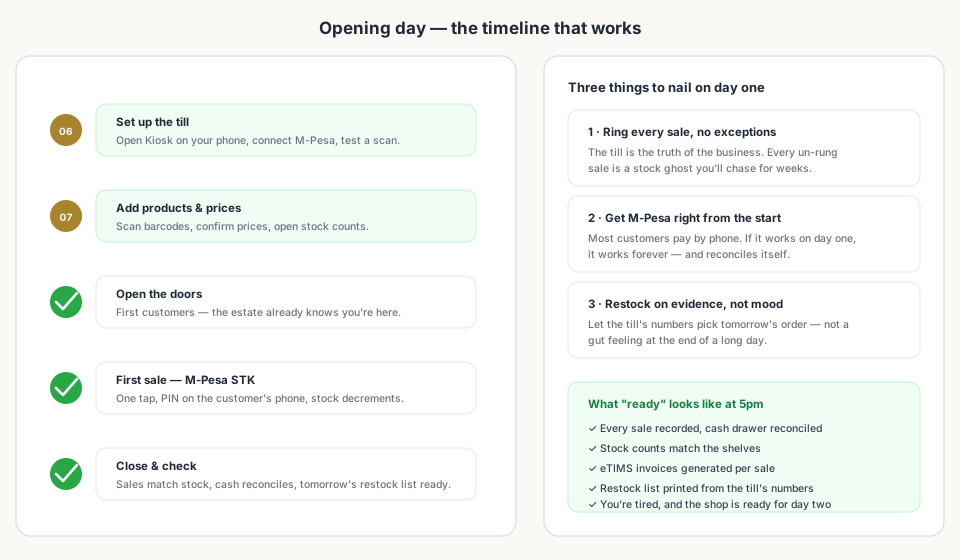
- Ring every sale, no exceptions — an un-rung sale is a stock ghost you'll chase for weeks.
- Get M-Pesa right from the start — if it works on day one, it works forever, and reconciles itself.
- Restock on evidence, not mood — let the till's numbers pick tomorrow's order.
8. The First Month: Three Numbers to Watch
- Daily sales — are you trending toward the KSh 50,000/day zone where the shop stops surviving and starts earning?
- Margin % — is the basket earning its 15–30%, or are you discounting winners by accident?
- Stockouts — which best sellers keep running out? That's your restock list, straight from the till.
Watch those three and the shop teaches you what it needs. Ignore them and the shop teaches you anyway — the expensive way.
Bottom Line
Read next:
- How to Grow a Mini-Mart in KenyaFrom surviving to scaling — compliance, stock control, and reinvestment.
- Set Up a POS in Kenya in 30 MinutesTill, storefront, M-Pesa, and eTIMS live the same afternoon.
- Barcode Search in Kenya: Look Up Any ProductBuild your catalog faster by scanning instead of typing.
- Top 10 POS Systems in Kenya (2026)The ranking that compares Kenya's POS platforms on M-Pesa, eTIMS, and fit.
- Online + Physical: One InventoryOne stock count across your web shop and your counter.
Frequently asked questions
How much money do I need to start a mini-mart in Kenya?
A realistic budget for a single-branch estate mini-mart is KSh 350,000–500,000 — initial stock, a three-month rent deposit, basic fixtures, licenses, and a small cash float. You can start leaner with second-hand fixtures and a tighter first order.
What licenses do I need to open a mini-mart in Kenya?
Register your business name on eCitizen, get your county single business permit (trade license), attach your KRA PIN to the business, register for eTIMS invoicing, and set up an M-Pesa till or Buy Goods number. Start them the day you sign the lease.
What should I sell first in my mini-mart?
Start with a deep basket of best sellers: staples (maize flour, rice, sugar, cooking oil) at roughly 40% of your stock budget, then drinks, dairy and bread, snacks, toiletries, and airtime. About 20 well-stocked items per category beats a thin spread over 200.
Do I need a POS from day one?
Yes. Every sale should be rung from day one so your stock counts are honest from day one. Kiosk runs on the phone you already own and starts free — 300 products and one cashier — with M-Pesa and a storefront included.
How much stock should I buy before opening?
Buy deep on the items you know will sell and keep a working-capital cushion for your first restock cycle. Stock is your cash until it sells — the shops that fail are usually the ones with empty shelves or overflowing slow movers.
Is a mini-mart profitable in Kenya?
Margins in the category typically run 15–30%, and most owners consider the business genuinely profitable once daily sales cross roughly KSh 50,000 — the point where the shop stops just covering rent and stock and starts generating real profit.
Related articles
- GrowthHow to Grow a Mini-Mart in Kenya: From One Shop to a Real BusinessPractical steps to move a Kenyan mini-mart from surviving to scaling — compliance, stock control, M-Pesa, digital presence, reinvestment, and knowing when to open a second branch.
- Getting startedSet Up a POS in Kenya in 30 MinutesHow to set up a POS in Kenya in 30 minutes — create your account, add products, take M-Pesa payments, and stay eTIMS-ready with KRA. No IT project required.
- RankingsTop 10 POS Systems in Kenya (2026) — Ranked & ComparedBest POS systems in Kenya for 2026, ranked on setup speed, native M-Pesa, eTIMS readiness, and shop-floor fit. Compare Kiosk.ke, Odoo, SimbaPOS, Tiwi, and more.
- InventoryOnline + Physical: One Inventory (Stop Selling What You Don't Have)How a single stock count across your web shop and counter stops overselling, ghost stock, and late-night spreadsheet reconciliations.
- GuidesBarcode Search in Kenya: Look Up Any Product by Barcode or NameLook up any product by barcode or name in Kenya — EAN-13, UPC, GTIN. Check prices and stock across Kiosk stores with the free kiosk.ke barcode search.
- HardwareWhat Hardware Do You Actually Need for a POS in Kenya?Phone, scanner, printer — a no-nonsense hardware checklist for a Kenyan retail counter. Start with the phone you own, upgrade when the queue demands it.
- PaymentsWhy M-Pesa Integration Matters (and What 'Native' Really Means)In Kenya, mobile money is how customers pay. What native M-Pesa at the till means — STK Push in one tap, auto-credited sales, and a shift that balances itself.
- OperationsBuilding Systems for Your Mini-Mart: Hires, Roles, and Routines That Run Without YouHow to structure roles, scopes of work, and daily/weekly/monthly routines so a Kenyan mini-mart runs the same whether you're at the till or not.
- Tax & complianceTaxes for Mini-Marts in Kenya: The Complete eTIMS & KRA GuideEverything a mini-mart owner in Kenya needs to know about tax — eTIMS, VAT, turnover tax, income tax, PAYE, excise, records, and penalties — and how the right till keeps it manageable.
Ready for a POS built for Kenya?
Start free on Kiosk.ke — barcode POS, native M-Pesa STK, offline sales, and an online storefront from one stock count.